By Lauren Holland
Updated November 2026
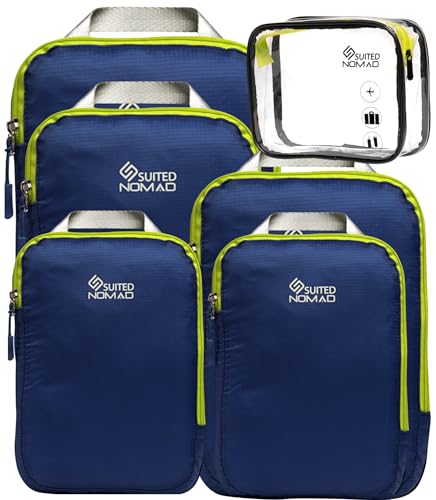
Compression travel packing cubes are zippered fabric pouches with a second zipper or strap that squeezes air out of soft clothing. Used well, they can free up roughly a quarter to a third of a bag’s volume for bulky items, and they keep everything sorted. This guide covers how to load them, which items to compress and which to leave alone, and how to avoid the wrinkles and damage that come from overpacking. If you want more background, see Packing Cubes or Compression Bags (2026): Which Is Better for Travel?.
Know What Compression Cubes Do and Don’t Do
A compression cube has a standard mesh or nylon body and an extra panel, usually on top, that cinches down with a zipper or strap. Compressing the cube reduces the air trapped between clothes, but it does not reduce the volume of the clothes themselves. Soft items such as t-shirts, leggings, socks and knit tops compress well. Structured items such as jeans, blazers, and anything with stiff seams or padding compress poorly and can crease.
Shopping for one? See our guide: 5 Best Travel Packs With Daypack Options for Trips in 2026.
Most of the space saved comes from bulky knits, sweatshirts and multiple layers stacked together. If you are comparing styles, the article Compression vs Regular Packing Cubes: How Much Space Do You Save? shows how much difference the compression panel actually makes in practice.
Steps for Loading a Compression Cube
- Fold soft items to a width that matches the cube’s interior, usually about 10 to 12 inches for a medium cube. Fold, don’t roll, so that the folds fall in the same direction across the stack.
- Place the heaviest or bulkiest items on the bottom and keep the flat side against the cube’s walls.
- Close the main zipper partially, then open the compression panel and cinch it gradually. Stop when the cube feels firm but the fabric is not bowing or straining at the seams.
- Close the compression zipper fully, then check that the main zipper still closes without force.
Choosing What to Compress
Not every item benefits. Use this checklist to decide:
- Compress: knit tops, sweaters, leggings, underwear, socks, sleepwear, and packable jackets.
- Keep uncompressed: dress shirts, tailored pants, dresses with structure, electronics, and anything with a hard shell.
- Compress lightly: denim and thick cotton, which resist flattening and can develop permanent creases.
Overfilling is the most common cause of trouble. A cube that closes with a strained zipper is squeezing too hard, and the strain can split seams over a long trip.
Packing Compression Cubes Into a Bag
Once the cubes are loaded, arrange them to fill the bag evenly. Place the firmest cube against the back panel of a backpack or the hinge side of a suitcase, and put the softest cube on top where it can absorb pressure. Keep one cube reserved for items you need first, such as a change of clothes, so you can reach it without unpacking everything. For a deeper look, Packing Cubes vs Bare Packing: Do Packing Cubes Take Up More Space? (2026) covers this in detail.
For families or couples sharing a bag, color-coding helps keep track of who owns what. The guide Packing Cubes for Family Trips: Color-Coding and Sharing a Suitcase covers that approach in detail.
Common Mistakes
- Compressing structured clothing, which creates creases that do not come out with steaming.
- Forcing the zipper closed, which stresses seams and can break the compression strap.
- Packing a cube so full that it cannot fit into the bag’s side pockets or under the lid.
- Assuming a cube protects against crushing. It reduces air, but heavy items should still sit at the bottom of a suitcase.
Recommended Gear
- Eagle Creek Pack-It Specter Compression Cube: A zippered compression cube with a clear panel that makes it easy to see contents without opening it. View on Amazon
- Peak Design Packing Cubes: Compression cubes designed to fit a range of luggage, useful if you want a consistent set. View on Amazon
- Shacke Packing Cubes Set: A multi-size set that lets you match cube size to the items you pack most. View on Amazon
FAQ
Do compression packing cubes wrinkle clothes?
They can, especially with structured fabrics like cotton button-downs or denim. Keep compression light for those items and use the cube for knits and layers.
Are compression packing cubes allowed on flights?
Yes, they are standard soft luggage contents. Check your airline’s carry-on size limits, since a full cube can add bulk.
Are vacuum bags better than compression cubes?
Vacuum bags remove more air but are harder to reuse and can damage delicate fabrics. Cubes are more practical for most trips. Consult the product guidance for any specific fabric care needs.
Conclusion
Compression travel packing cubes save space when you use them on soft, bulky clothing and leave structured items alone. Load them evenly, close them without forcing the zipper, and keep one cube accessible for essentials. With those habits, a single carry-on can hold a week of clothes with room to spare.
Related reading
- Packing Cubes vs Vacuum Compression Bags
- Best Compression Packing Cubes
- Ultralight Packing Cubes: Weight Saved vs Durability
Ready to choose one?
About Lauren Holland
Lauren Holland is part of our editorial team and reviews and edits our backpacks & packing systems guides, checking product details against manufacturer specifications and owner feedback.