 By Lauren Holland
Updated November 2026
Arc’teryx packing cubes are a solid option for organizing clothes and small items inside a backpack or duffel. This guide walks through how to choose the right sizes for your trip, how to fill them so they actually stay organized, and where people tend to go wrong. By the end you should know which cubes match your pack and how to load them.
Step 1: Decide What Each Cube Needs to Hold
Start with your gear list rather than the cubes themselves. Sort your items into categories such as base layers, shirts, bottoms, sleep clothes, and toiletries. Packing cubes work best when each one holds a single category, because you can pull out one cube without unpacking everything else.
Shopping for one? See our guide: Arc'teryx Hiking Backpack vs Osprey: Which Should You Choose?.
A common setup for a 3–5 day trip is one medium cube for tops, one for bottoms, and one small cube for underwear, socks and accessories. For a longer trip, add a second medium cube rather than making one cube oversized, since oversized cubes tend to shift and bulge.
Step 2: Match Cube Sizes to Your Pack
Measure the internal width and height of your pack before buying. Cubes that are slightly narrower than the pack body slide in and out easily. Cubes that are too wide force you to bend the frame sheet or cram the lid. Manufacturers usually list cube dimensions in inches or centimeters, so compare those against your pack’s internal space and leave a finger’s width of clearance.
For a pack in the 40–50 liter range, two medium cubes and one small cube usually fit with room for a sleeping bag below. Smaller packs often do better with a single medium cube plus a slim sleeve, since stacking several cubes wastes height.
Step 3: Pack the Cubes in the Right Order
- Place the cube you will need last, such as sleep clothes, at the bottom of the pack.
- Put heavier cubes close to your back and between your shoulder blades to keep the load centered.
- Put the cube you need most often, such as a rain shell or snacks, near the top or in a side pocket.
- Roll clothes instead of folding them to reduce wrinkles and to keep the cube from bulging.
- Zip each cube fully before placing it, so the closure does not catch on other items.
Step 4: Decide Between Standard and Compression Cubes
Standard cubes keep clothes organized but do not change the total volume they occupy. Compression cubes have a secondary strap or zip that squeezes air out and reduces height. Compression helps most with bulky insulation or soft goods, while it does little for dense items like dry socks or hard-shell layers. If you are short on space, compression is worth considering; if your pack already has room, standard cubes are simpler and lighter.
Packing Checklist
- Gear list sorted into categories
- Pack internal dimensions measured
- Cube sizes selected (small, medium, or both)
- Heaviest cube placed close to the back panel
- Rain layer and snacks reachable without unpacking
- All zippers closed before loading
Common Mistakes
- Overfilling one cube so it bulges and blocks the pack’s main compartment.
- Packing every cube with a mix of clothes, which defeats the purpose of organizing by category.
- Using compression cubes for everything, which can make it hard to pull out a single item quickly.
- Ignoring the pack’s frame and hip belt, so heavy cubes sit too low or too far from the spine.
Recommended Gear
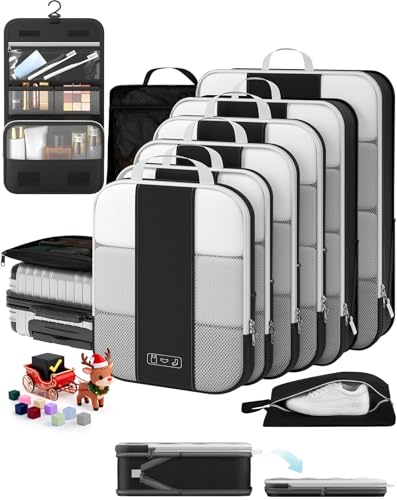
- Arc’teryx packing cubes: a good match if you already use Arc’teryx packs and want matching sizes and zipper quality. View on Amazon
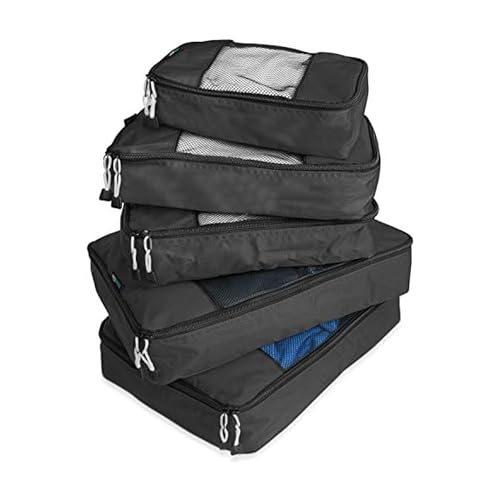
- Generic lightweight packing cube set: a budget pick for trying out cube sizes before committing to a premium set. View on Amazon
For a deeper comparison of cube styles and fabrics, see How to Choose Packing Cubes: Fabric, Zippers, Sizes and Shapes and Packing Cube Size Guide: What Fits in Small, Medium and Large. If you are weighing compression against standard, Compression vs Regular Packing Cubes: How Much Space Do You Save? covers that tradeoff in more detail.
FAQ
Do Arc’teryx packing cubes fit every backpack?
Not automatically. Measure your pack’s internal width and height and compare them to the cube dimensions listed by the manufacturer. Leave a little clearance so the cubes slide in without forcing the frame. We also found 6 Best Arc'teryx Mantis 26L Daypack Options Compared (2026) useful on this point.
Are compression cubes always better?
No. Compression saves height on soft, bulky items, but it can make it harder to access individual pieces. Standard cubes are often easier for short trips or for packs that already have spare room.
How many cubes do I need for a weekend trip?
Two or three cubes are usually enough: one medium for tops, one for bottoms, and one small for small items. Add a cube only if a category is consistently overflowing.
Conclusion
Arc’teryx packing cubes work best when you size them to your pack, sort your gear by category, and load them in an order that matches how you will use each item. Start with two or three cubes, test the setup on a short trip, and adjust from there. Check manufacturer sizing charts and product pages for current dimensions before you buy.
Related reading
- Ultralight Packing Cubes: Weight Saved vs Durability
- Suitcase Organizers Beyond Packing Cubes: Shelves, Dividers and Hanging Systems
Ready to choose one?
About Lauren Holland
Lauren Holland is part of our editorial team and reviews and edits our backpacks & packing systems guides, checking product details against manufacturer specifications and owner feedback.