By Colin Foster
A solar panel hiking backpack lets you top up a phone, GPS unit or headlamp while you walk, provided the sun cooperates. For most hikers the appeal is simple: fewer power banks to carry, and a way to keep navigation and emergency devices alive on multi-day trips where a wall outlet is never going to show up. The catch is that a built-in or clip-on panel gives you a modest trickle of power, not a full recharge, so the right choice depends on what you need to charge, how many days you’ll be out, and how much weight you’re willing to carry. The picks below were selected by reviewing manufacturer specifications, brand reputation and common owner feedback patterns, with an eye toward panel output, waterproofing, pack capacity and how well each design suits everyday hiking.
Our Top Picks
Quick Comparison
| Product | Best for | Key feature |
|---|---|---|
| GEYOTO 45W Solar Panel Charger Fast Charging for Phone PD 25W USB-C/USB-A | Hikers who want a standalone panel to clip onto any pack | IP68 waterproof with PD 25W USB-C output |
| XTPower Xplorer Globetrotter 42 Ultra Durable Hiking Solar Backpack | Day and overnight hikers wanting a full-size pack with a removable panel | Removable 10 W panel on a 42 L backpack |
| RIK SPORTS Solar Backpack, Solar Powered Laptop Backpack 7W Hiking Backpack | Light daily carry and urban-to-trail use | Built-in 7 W panel with USB port and LED light |
| MHPOWOS 40W Portable Solar Panel Charger with USB C, USB A and DC Outputs | Multi-device charging on longer trips | Folding design with USB-C, USB-A and DC outputs, IP65 rated |
GEYOTO 45W Solar Panel Charger Fast Charging for Phone PD 25W USB-C/USB-A

GEYOTO 45W Solar Panel Charger Fast Charging for Phone PD 25W USB-C/USB-A | 26% High Efficiency,IP68 Waterproof,Portable Solar Panel for iPhone,iPad,Power Bank,Tablets,Camping,Backpacking,Hiking
This is a standalone folding panel rather than a backpack, which makes it the most flexible option here. It suits hikers who already own a pack they like and want to add solar charging by strapping a panel to the outside during sunny stretches.
Key specs
- 45 W rated panel output in the listing title
- USB-C PD 25 W output and USB-A output
- IP68 waterproof rating as stated in the listing
- Advertised 26% conversion efficiency
Pros
- Works with any pack, so you aren’t locked into a specific backpack
- PD output supports fast charging for many modern phones and tablets
- IP68 rating suggests strong protection against dust and water
Cons
- You must attach and position it yourself, which adds setup time
- Panels mounted outside a pack can snag on brush or get knocked off
XTPower Xplorer Globetrotter 42 Ultra Durable Hiking Solar Backpack
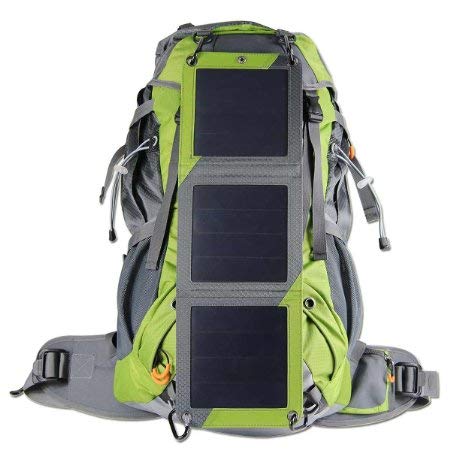
XTPower Xplorer Globetrotter 42 | Ultra Durable Hiking Solar Backpack Lime Green with Removable 10 Watt Panel | Charges USB devices including Smartphones, Tablets, GPS, and more up to 5V
This is the most pack-like option, a full 42-liter backpack with a removable panel. It fits hikers who want one bag that handles overnight or long day trips and can also charge small electronics along the way.
Key specs
- 42-liter pack capacity per the model name
- Removable 10 W solar panel
- USB output for smartphones, GPS units and similar devices, rated up to 5 V
- Lime green colorway
Pros
- Panel can be removed for charging and stowed when the sun is gone
- Capacity is generous enough for overnight gear on shorter trips
- Full-pack design keeps the charging system integrated with your carry
Cons
- A 10 W panel charges slowly, so plan on hours of sun for a full phone
- A larger pack adds weight that lightweight hikers may not want
RIK SPORTS Solar Backpack, Solar Powered Laptop Backpack 7W Hiking Backpack

RIK SPORTS Solar Backpack, Solar Powered Laptop Backpack 7W Hiking Backpack with USB Charging Port & LED Light, Waterproof Outdoor Travel with Solar Panel for Camping, Hiking & Adventure Gear
This is a built-in-panel daypack aimed at lighter, everyday carry. It suits commuters who also take short trail walks and want a bag that can top up a phone without extra accessories.
Key specs
- 7 W built-in solar panel
- USB charging port and LED light, as listed
- Laptop-compatible design per the listing name
- Marketed for camping, hiking and travel use
Pros
- Panel is integrated, so there is nothing extra to attach
- Built-in LED light adds a useful camp or trail-end function
- Suits daily carry as well as trail use
Cons
- A 7 W panel delivers a small amount of power, best for maintaining rather than charging
- Built-in panels are fixed to the pack face, so angling depends on how you wear it
MHPOWOS 40W Portable Solar Panel Charger with USB C, USB A and DC Outputs

MHPOWOS 40W Portable Solar Panel Charger with USB C, USB A and DC Outputs | Folding Solar Charger IP65 Waterproof Solar Phone Charger, Ultra-Compact Design for Backpack Camping Hiking Phones Power Ban
This is a compact folding panel with several output types, so it fits hikers who charge more than a phone and want one panel to handle the group’s small devices. Pair it with any pack that has an exterior attachment point.
Key specs
- 40 W rated panel per the listing name
- USB-C, USB-A and DC outputs
- IP65 waterproof rating as stated
- Folding, compact design
Pros
- Multiple output types cover phones, lights and some DC devices
- IP65 rating is suitable for light rain and trail dust
- Folds down small enough to clip to most packs
Cons
- Like any external panel, it needs to be mounted and aimed
- Output depends heavily on sun angle and cloud cover
Buying Guide
Choosing a solar panel hiking backpack comes down to three questions: what you need to charge, how many days you will be off-grid, and how much weight and bulk you can carry. Start with the devices. A phone and a headlamp are a light load. A GPS unit, a satellite messenger and a tablet is a heavier one, and panels with higher rated wattage will serve you better.
Selection criteria
- Rated panel output: Wattage is the headline number, but the realistic output is lower. Expect a fraction of the rating in practice.
- Output ports: USB-C with Power Delivery is the most useful for modern phones. USB-A is still common for older devices.
- Waterproofing: IP65 handles rain and dust. IP68 is rated for longer submersion and is better for river crossings and wet camps.
- Pack capacity and fit: A solar pack has to carry your gear comfortably. Check the volume and the suspension design.
- Panel mounting: Built-in panels are simpler but fixed. Removable or clip-on panels can be angled toward the sun.
Specs to check before buying
- Confirm the rated watts and whether the manufacturer states real-world output.
- Check the output ports against your devices, including cable type.
- Read the IP rating and note what it covers.
- Check pack volume in liters and the empty weight.
- Look at how the panel attaches and whether it can be removed for stowing.
Choosing by need
- Phone and GPS on a day hike: A small built-in panel is usually enough to keep devices topped up.
- Multi-day trips with several devices: A larger removable panel or a higher-wattage folding panel gives you more daily energy.
- Light, everyday carry: A daypack with an integrated panel fits well.
- Keeping your current pack: A standalone folding panel that clips on is the most flexible route.
Things to watch out for
- Solar output drops sharply under clouds, in shade, and at low sun angles, so plan charging for midday.
- Panels mounted to the outside of a pack are exposed to scrapes and snags.
- Heat can reduce charging efficiency and can affect batteries, so avoid leaving devices in direct sun for long periods.
- If you rely on a device for emergency communication, carry a backup power source and do not depend on solar alone.
For a broader look at keeping gear dry on the trail, see Waterproof Backpack for Hiking: How to Choose One That Keeps Gear Dry. If you carry camera equipment alongside electronics, Camera and Hiking Backpack: How to Choose One That Protects Your Gear covers padding and protection. For a full-size pack with a frame, Hiking Backpack with Frame: How to Choose the Right One (2026) is a useful reference.
FAQ
Can a solar panel hiking backpack fully charge a phone in a day?
Usually not from a small panel alone. Most built-in or clip-on panels deliver a trickle, so a few hours of direct sun may add a meaningful percentage but rarely a full charge. A larger panel and good sun angle improve results.
Does the panel work through a pack’s fabric or behind a closed lid?
Built-in panels work because they sit on the exterior. Anything inside the pack or behind a closed cover will not receive sunlight. Keep the panel exposed and angled toward the sun.
What does an IP rating tell me?
IP ratings describe resistance to dust and water. The first digit covers solids and the second covers liquids. IP65 generally means dust-tight and resistant to water jets. IP68 indicates protection against longer immersion, though manufacturers specify the exact depth and time limits.
Should I charge electronics while I hike or at camp?
Many hikers charge during midday breaks when the sun is strongest and the pack is stopped. Charging while walking can also work if the panel is exposed and not shaded by the pack body.
Are solar backpacks safe for lithium batteries in hot weather?
Heat can degrade batteries over time, and direct sun can raise device temperatures. Avoid leaving devices baking on a panel for long stretches, and check device guidance from the manufacturer. If you have questions about battery safety for specific devices, consult the device maker or a qualified professional.
Do I need a backup power source?
For short day trips in good weather, solar may be enough. For multi-day trips, emergency communication, or dim-weather regions, carry a backup power bank and treat solar as a supplement rather than a sole source.
How much does a solar panel affect pack weight?
Panels add weight and bulk, sometimes noticeably. Compare the empty weight of the pack and the panel against your base weight goal, and consider whether a standalone panel that you carry only on sunny days makes more sense than a fixed one.
Conclusion
Each of these four solar panel hiking backpacks suits a different hiker. The GEYOTO standalone panel is the most flexible if you want to keep your existing pack. The XTPower Xplorer Globetrotter 42 suits hikers who want one integrated bag for overnight carry. The RIK SPORTS solar backpack is a practical fit for lighter daily carry and occasional trail use. The MHPOWOS folding panel suits hikers who charge several devices and want a compact, multi-output option to clip onto a pack. Match the panel’s realistic output to the devices you actually need to charge, check the waterproof rating against your conditions, and always carry a backup for trips where reliable power matters.
Related reading
- Water Resistant Hiking Backpack: How to Choose One That Keeps Gear Dry
- Ozark Trail 60L Hiking Backpack: Fit, Packing and Buying Guide
About Colin Foster
Colin Foster is part of our editorial team and reviews and edits our backpacks & packing systems guides, checking product details against manufacturer specifications and owner feedback.