By Colin Foster
A mountain bike hydration pack lets you carry water, tools, and a few layers without reaching for a bottle cage mid-climb. The right pack sits close to your back, keeps weight stable on rough descents, and gives you a bladder you can refill and sip from without stopping. Choosing one comes down to a handful of practical factors: bladder capacity, fit and ventilation, storage for tools and a spare tube, how the pack stays put at speed, and whether you ride short local loops or long backcountry days. The picks below are ranked by how well each one matches those criteria, based on manufacturer specifications, brand reputation, and the patterns riders most often mention in owner feedback. None of them were tested by us, so treat the details as a starting point and check the listing before you buy.
Our Top Picks
Quick Comparison
| Product | Best for | Key feature |
|---|---|---|
| CamelBak Classic Bike Hydration Pack | Everyday trail riders who want a reliable all-round pack | Breathable, secure fit with a long-running hydration design |
| MSR Low-Profile Race Hydration Pack | Riders who want a slim pack that stays out of the way | Low-profile 2-liter bladder design built for fast riding |
| Unigear Hydration Pack Backpack with 2L Water Bladder | Riders on a budget who also hike or run | 70 oz bladder with multi-sport versatility |
| Osprey Berm 8L Bike Hydration Pack | Riders who carry more gear on longer rides | 8-liter capacity with Hydraulics reservoir system |
| Osprey Berm 2L Bike Hydration Pack | Short rides and riders who want minimal bulk | Compact 2-liter design with Hydraulics reservoir system |
CamelBak Classic Bike Hydration Pack

CamelBak Classic Bike Hydration Pack, Graphite/Black | Efficient Hydration with Every Sip, Lightweight Comfort for Long Rides, Secure, Breathable Fit, Visibility When It Matters
This pack suits riders who want a dependable, all-around hydration option for trail and road-adjacent riding. It is a good fit if you ride a few times a week and want one pack that handles water, a snack, and a multitool without fuss.
Key specs
- Graphite/Black colorway
- Designed as a bike hydration pack with a bladder system
- Breathable back panel and secure fit for active riding
- Visibility-oriented styling for riding near traffic
Pros
- Comfortable, breathable fit that many riders report keeping cool on climbs
- Straightforward bladder design that is easy to refill and clean
- Well-known brand with broad availability of replacement parts
Cons
- Storage is modest for riders who carry a lot of extra gear
- Some owners find the bladder hose routing less convenient on certain frames
MSR Low-Profile Race Hydration Pack

MSR Low-Profile Race Hydration Pack – 2-Liter Water Bladder Backpack – Lightweight, Secure Fit for Off-Road, Dirt Bike, MTB, MX, Enduro & Adventure Riding – Black
This pack is aimed at riders who prioritize a slim, low-profile profile and a secure fit at speed. It works well for fast, technical trail riding and enduro-style days where a bulky pack would shift or catch on brush.
Key specs
- 2-liter water bladder
- Low-profile race-style design
- Black colorway
- Marketed for off-road, dirt bike, MTB, MX, enduro, and adventure riding
Pros
- Slim profile keeps the load close and stable on rough terrain
- Good choice for riders who want water without a large pack
- Sits low enough that it is less likely to interfere with body movement
Cons
- A 2-liter capacity may be limiting on long, hot rides
- Minimal storage means you will need to plan for tools and snacks
Unigear Hydration Pack Backpack with 2L Water Bladder
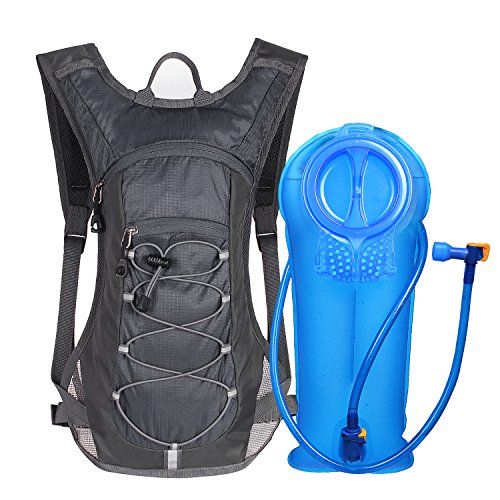
Unigear Hydration Pack Backpack with 2L Water Bladder for Hiking & Cycling | Lightweight Water Backpack For Running, Biking, Climbing And Camping, 70 Oz Bladder, Hydration Backpack For Hiking
This pack suits riders who also hike, run, or climb and want one hydration pack for several activities. It is a practical choice for budget-minded buyers who value versatility over a bike-specific design.
Key specs
- 2-liter (70 oz) water bladder included
- Marketed for running, biking, climbing, and camping
- Designed for hiking and cycling use
Pros
- Works across several outdoor activities, not just cycling
- Generally lower entry cost than premium bike-specific packs
- Bladder capacity matches many shorter trail rides
Cons
- Not designed specifically for bike riding posture, so fit can feel less dialed-in
- Owners often mention that multi-sport packs can ride looser at speed than bike-specific designs
Osprey Berm 8L Bike Hydration Pack
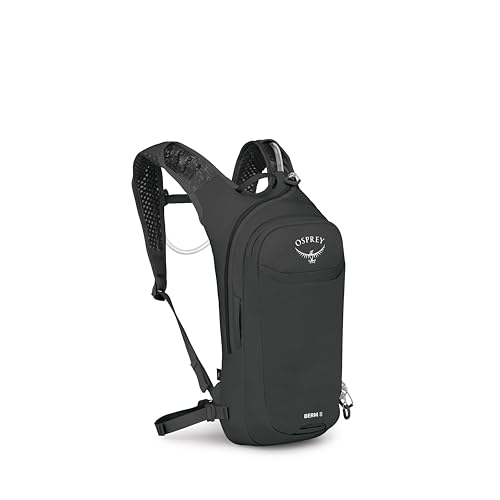
Osprey Berm 8L Bike Hydration Pack, Black OS | bike backpack, cycling gear, mountain biking, commuter ride, Hydraulics reservoir, water bladder, water reservoir, OS size
This is the pick for riders who need more room. The 8-liter capacity suits longer rides, cold-weather layers, spare parts, and food for a full day out. It is a strong option for riders who want a bike-specific pack with a dedicated reservoir system.
Key specs
- 8-liter capacity
- Hydraulics reservoir system
- Bike-specific pack designed for mountain biking and commuting
- OS (one size) fit
Pros
- Enough room for layers, tools, and food on full-day rides
- Hydraulics reservoir system is widely regarded as easy to fill and drink from
- Bike-specific design suits riding posture
Cons
- Larger capacity adds bulk on short, fast rides
- One-size fit may not suit every torso length
Osprey Berm 2L Bike Hydration Pack

Osprey Berm 2L Bike Hydration Pack, Gray OS | bike backpack, cycling gear, mountain biking, commuter ride, Hydraulics reservoir, water bladder, water reservoir, Gray color
This smaller version of the Berm line fits riders who ride shorter loops and want a minimal pack. It keeps the same Hydraulics reservoir approach in a more compact package, which makes it a sensible choice for quick sessions after work.
Key specs
- 2-liter capacity
- Hydraulics reservoir system
- Gray colorway
- Bike-specific pack for mountain biking and commuting
Pros
- Compact size minimizes bulk on short rides
- Same reservoir system as the larger Berm, familiar for existing owners
- Bike-specific fit suits riding posture
Cons
- 2 liters is limiting for long or hot rides
- Little room for extra layers or food
Buying Guide
Before comparing individual packs, it helps to be clear about how you ride. A short local loop on a warm day has very different needs from a four-hour mountain climb with changing weather. Most of the decisions below follow from that one question.
Selection criteria
When evaluating a mountain bike hydration pack, focus on four things: how much water you need, how the pack fits your torso while you are in a riding position, how much you need to carry beyond water, and how the pack behaves on rough ground. Brand reputation and warranty support also matter for a piece of gear that will see mud, sweat, and repeated use.
Important features
- Bladder capacity: Common sizes are 1.5 to 2 liters for short rides and 3 liters or more for long, hot days.
- Reservoir design: Look for a bladder that fills through a wide opening and has a shut-off valve. Some systems use quick-release hoses for easier cleaning.
- Fit and ventilation: A back panel with channels or mesh helps airflow. Check that the pack sits high enough to stay out of your saddle’s way.
- Storage: A dedicated tool pocket, a zippered pocket for keys or a phone, and a stretch pocket for a light layer are useful on most rides.
- Stability: Compression straps and a snug torso fit reduce bounce on descents.
Specs to check
Verify the bladder capacity in liters or ounces, the total pack volume in liters, the included hose and valve type, and whether a bladder is included or sold separately. Check the listing for pack dimensions and whether the design is sized or one size. If a spec is not listed, do not assume it.
Choosing by need
- Short local loops (under 90 minutes): A 2-liter pack with minimal storage keeps weight and bulk low.
- Half-day rides: Plan for 2 to 3 liters of water, plus space for a spare tube, multitool, and one layer.
- Full-day or hot-weather rides: Choose 3 liters or more, or pair a smaller pack with a bottle on the frame.
- Multi-sport use: A pack designed for hiking and running may suit you better than a bike-specific design, though fit can feel looser at speed.
Things to watch out for
- A bladder that is not fully dried after cleaning can grow mildew. Hang it open to air-dry between rides.
- Overloading a small pack can make it bounce. Keep heavy items low and close to your back.
- Hose routing matters. A hose that snags on the frame or handlebars can be a nuisance on technical terrain.
If you are new to hydration packs in general, the broader guide Best Backpack for Through Hiking: How to Choose the Right Pack for a Long Trail explains how load distribution and torso fit apply across different pack types. For a running-focused comparison that shares many of the same fit principles, see 7 Best Top Rated Running Hydration Packs (2026): Expert Picks.
FAQ
How much water should a mountain bike hydration pack hold?
For rides under about 90 minutes in mild weather, 1.5 to 2 liters is usually enough. For longer or hotter rides, plan for 3 liters or more, and refill along the way if your route allows it.
Is a bike-specific hydration pack better than a running or hiking pack?
A bike-specific pack is usually designed around riding posture, with a back panel and strap layout that stays stable when you lean forward. A multi-sport pack can work well for mixed activities, but many riders find a bike-specific design fits better at speed.
How do I clean a hydration bladder?
Rinse the bladder after every ride, then wash it with warm water and a small amount of mild soap. Use a bottle brush or the brush kit often sold with bladders to reach the hose and corners. Rinse thoroughly and hang it to air-dry with the cap open. Consult the manufacturer’s care instructions for specific cleaning tablets or materials.
Can I carry tools and a spare tube in a hydration pack?
Yes, most mountain bike hydration packs have a dedicated pocket or two for small tools and a tube. Check the storage layout in the listing, since smaller packs may leave little room beyond the bladder.
Will a hydration pack make my back sweaty?
Some sweat is normal. Packs with mesh or channeled back panels tend to keep airflow better, but no pack is fully dry on a hot climb. Loosening straps slightly on long climbs can improve ventilation.
Does a bladder hose need to be routed a certain way?
Route the hose over your shoulder and secure it with the clip or magnet system provided. Keep slack minimal so it does not catch on the handlebars or frame.
Should I choose the 2-liter or 8-liter option?
Choose based on ride length and gear, not on what seems like a better deal. A 2-liter pack suits short, fast rides, while an 8-liter pack suits full-day trips where you carry layers and food as well as water.
Conclusion
For most mountain bikers, the best mountain bike hydration pack is the one that matches your ride length and how much you need to carry. The CamelBak Classic Bike Hydration Pack suits riders who want a dependable, all-around option. The MSR Low-Profile Race Hydration Pack fits riders who prioritize a slim, stable profile on fast trails. The Unigear pack suits riders who also hike, run, or climb and want one pack for several activities. The Osprey Berm 8L is the choice for full-day rides that call for extra room, while the Osprey Berm 2L suits short sessions and minimal bulk. Check the listing details for capacity, fit, and storage before you buy, and match the pack to the rides you actually take.
Related reading
- Travel Pack With Daypack: 5 Best Options for Trips in 2026
- North Face Backpack Hiking: How to Pick the Right Pack in 6 Steps
- How to Pack a Dress or Formalwear Without Wrinkles
- Backpacking Elk Hunt Gear List: Complete Checklist by Pack Weight
About Colin Foster
Colin Foster is part of our editorial team and reviews and edits our backpacks & packing systems guides, checking product details against manufacturer specifications and owner feedback.