By Colin Foster
Updated November 2026
Choosing a water filter for hydration pack use comes down to three things: how well it removes bacteria and protozoa, whether it keeps flow rate usable on a long climb, and how it connects to your reservoir. The picks below were chosen by reviewing product specifications, brand reputation and common owner feedback patterns, with a focus on filter type, capacity and compatibility with standard hydration packs.
Our top picks at a glance
- 1
 TOP CHOICEBest overallSawyer Products SP129 Squeeze Water Filtration System w/Two 32-Oz SqueView on Amazon
- 2
 TOP CHOICEBest for a 2 L in-line setupPuribag Adventure Bladder: 2 Liter Hydration Bladder with Filter – RepView on Amazon
- 3
 TOP CHOICEBest for a leak-resistant reservoirKUREIDA Hydration Bladder 2 Liter Leak Proof Water ReservoirView on Amazon
- 4
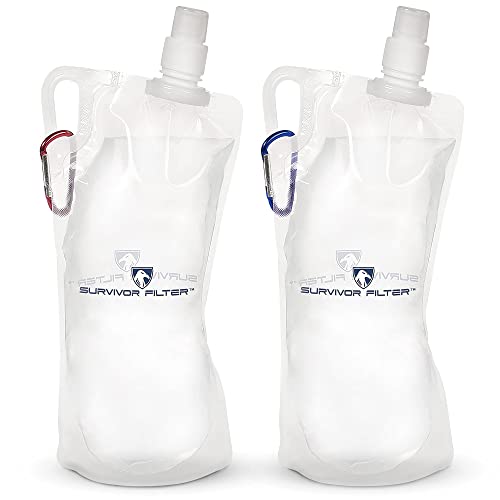 Best for packing flatSurvivor Filter 1L Clear Collapsible Water Bottles – Travel, Hiking, Foldable, BPA-FreeView on Amazon
- 5
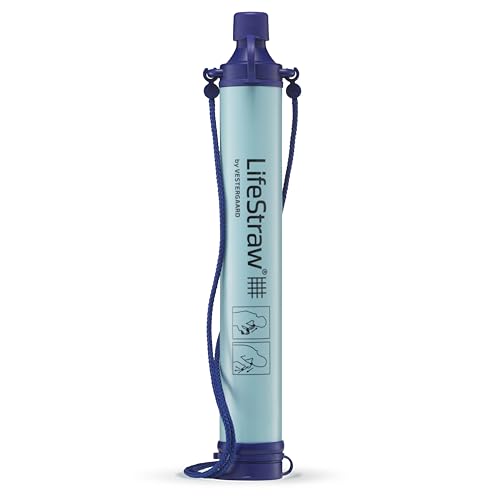 Best for emergency backupLifeStraw Personal Water Filter for Hiking, Travel and Emergency, Blue, 1PKView on Amazon
Our Top Picks
Quick Comparison
| Product | Best for | Key feature |
|---|---|---|
| Sawyer Products SP129 | Overall trail use | Hollow-fiber filter, hydration adapter |
| Puribag Adventure Bladder | In-line 2 L setup | Bladder with built-in filter |
| KUREIDA Hydration Bladder | Leak-resistant carrying | Wide opening, BPA-free |
| Survivor Filter 1L Collapsible | Packing flat | Collapsible, BPA-free bottles |
| LifeStraw Personal Filter | Emergency backup | Removes bacteria and parasites |
Sawyer Products SP129 Squeeze Water Filtration System w/Two 32-Oz Squeeze Pouches, Straw, and Hydration Pack Adapter
Sawyer Products SP129 Squeeze Water Filtration System w/Two 32-Oz Squeeze Pouches, Straw, and Hydration Pack Adapter
Best for: Overall trail use with a hydration pack
This kit suits hikers who want a filter they can use both as a squeeze system and as an adapter on a standard hydration pack hose. Manufacturers specify a hollow-fiber filter rated to remove bacteria and protozoa.
Pros
- Includes a hydration pack adapter for inline use
- Works as a squeeze filter when you are not wearing a pack
Cons
- Flow slows as the filter loads with sediment
Puribag Adventure Bladder: 2 Liter Hydration Bladder with Filter – Replacement Backpack Water System Compatible with Other Daypack Hydration Systems
Puribag Adventure Bladder: 2 Liter Hydration Bladder with Filter – Replacement Backpack Water System Compatible with Other Daypack Hydration Systems, Water Bladder for Backpacking, Hiking & Biking
Best for: A 2 L in-line filtered setup
Best suited to hikers who want to replace a bladder and filter in one step. Listings describe compatibility with a range of daypack hydration systems.
Pros
- Filter is built into the bladder, so there is no separate inline part
- Fits many common daypack hose setups
Cons
- Filter element needs replacing on the manufacturer’s schedule
KUREIDA Hydration Bladder 2 Liter Leak Proof Water Reservoir
KUREIDA Hydration Bladder 2 Liter Leak Proof Water Reservoir,BPA Free,Wide Opening,Military Water Bladder Combined with Hydration Backpacks for Biking Hiking Running Camping Climbing,White
Best for: Leak-resistant carrying of filtered water
A good match for riders and runners who want a wide-mouth reservoir that is easy to fill from a filter pouch or stream. Owners often report that the wide opening makes cleaning simpler. If you want more background, see 5 Best Hydration Pack Cyclings: Best Options Compared (2026).
Pros
- Wide opening for easier filling and drying
- BPA-free material per manufacturer specifications
Cons
- Does not include a filter, so you need a separate one
Survivor Filter 1L Clear Collapsible Water Bottles – Travel, Hiking, Foldable, BPA-Free
Survivor Filter 1L Clear Collapsible Water Bottles – Travel, Hiking, Foldable, BPA-Free – 2 x 33oz
Best for: Packing flat when you are not carrying a pack
These collapsible bottles suit people who need to carry extra water on the trail without adding bulk. Listings describe a foldable design that stores compactly when empty.
Pros
- Collapses flat to save space
- Sold as a 2-pack for backup capacity
Cons
- Not designed as a direct hydration pack reservoir
LifeStraw Personal Water Filter for Hiking, Travel and Emergency, Blue, 1PK
LifeStraw Personal Water Filter for Hiking, Travel and Emergency, Blue, 1PK | Water Filter for Hiking, Camping, Travel, and Emergency Preparedness, Removes Bacteria and Parasites
Best for: Emergency backup filtration
A compact personal filter that suits hikers and travelers who want a last-resort option in their kit. Manufacturers state it removes bacteria and parasites from untreated water.
Pros
- Very compact and light for emergency kits
- Drink directly from a source without a pouch
Cons
- Slower to fill a large reservoir than a squeeze system
Buying Guide
Filter Type and What It Removes
Hollow-fiber and ceramic filters are commonly rated for bacteria and protozoa, while many filters do not remove viruses or chemicals. Check the manufacturer’s stated removal ratings before you rely on a filter for a specific water source. If you want more background, see Sawyer Inline Hydration Pack Adapter: 3 Best Options Compared (2026).
Flow Rate and Clogging
Flow slows as sediment builds up, so a pre-filter or regular backflushing helps keep the system usable. Owners often report that murky water shortens filter life considerably.
Reservoir Size and Connection
Confirm the bladder capacity and whether the filter connects to a standard hydration hose. Mismatched fittings are a common cause of leaks and frustration on the trail.
Packing Size and Storage
Collapsible or compact designs save space in a daypack, but they may trade off flow or capacity. Weigh how much you carry against how often you refill.
Good picks for this: Sawyer Products SP129 and Puribag Adventure Bladder
FAQ
Do I need a filter in my hydration pack if I only hike on marked trails?
Many hikers still carry a filter, since natural water sources along trails can carry bacteria and parasites even when they look clear. A filter gives you a backup option if you run low or need to refill from a stream. Your own risk tolerance and the local water conditions should guide the decision.
What is the difference between a filter and a purifier?
A filter removes bacteria and protozoa through a physical barrier, which is what most of the options above do. A purifier also deals with viruses, usually through chemical treatment or UV light. For most backcountry use in North America, a filter is considered sufficient.
Will an inline filter slow down my drinking on the trail?
Some flow reduction is normal, especially as the filter cartridge fills with sediment. Inline and squeeze-style filters differ in how hard you have to work to pull water through them. Pre-filtering cloudy water and backflushing regularly helps keep the flow usable.
Can I use a filter with any hydration bladder?
Not always. Compatibility depends on the connector size and whether the filter is designed to attach to a bladder or to sit between a bottle and your mouth. Check the reservoir’s port and the filter’s adapter before buying to avoid a mismatch.
How often should I replace the filter cartridge?
Replacement depends on how much water you filter and how dirty that water is. Most manufacturers give a rated volume or lifespan, and you should watch for a noticeable drop in flow as a sign it is time. Never let a clogged or damaged filter go unchecked, since its protection depends on it being intact.
Should I store my filter wet or dry between trips?
Let the filter dry fully before long-term storage to reduce the chance of mold or bacterial growth inside the element. Some filters should be kept from freezing, so check the manufacturer’s storage guidance. Storing it in a cool, dry place extends its usable life.
Conclusion
If you want a proven filter for a hydration system with a wide range of compatible setups, the squeeze-style Sawyer option and the Puribag bladder cover the most common hiking needs. Choose the KUREIDA bladder if you mainly want a leak-resistant reservoir to pair with a filter you already own, and pick the Survivor collapsible bottles for flexible, lightweight carrying.
For emergency or travel kits, the LifeStraw is a simple, compact option that works well as a backup or for a bottle-style carry. Match your choice to how you plan to get water, how far you will go between sources, and whether your pack already has a bladder.
Related reading
- Water Buffalo Hydration Pack: 3 Best Options for Trail and Rave Days (2026)
- Hydration Pack or Water Bottle Hiking: How to Choose the Right Setup
- Hydration Pack With Filter: 3 Best Options Compared (2026)
- Hydration Pack Not Working: 6 Fixes to Get Water Flowing Again (2026)
- Hydration Pack No Bladder: How to Use a Water Bottle Setup on the Trail
- How to Wash Hydration Pack: A Step-by-Step Guide for Clean Water
About Colin Foster
Colin Foster is part of our editorial team and reviews and edits our backpacks & packing systems guides, checking product details against manufacturer specifications and owner feedback.