By Lauren Holland
Updated November 2026
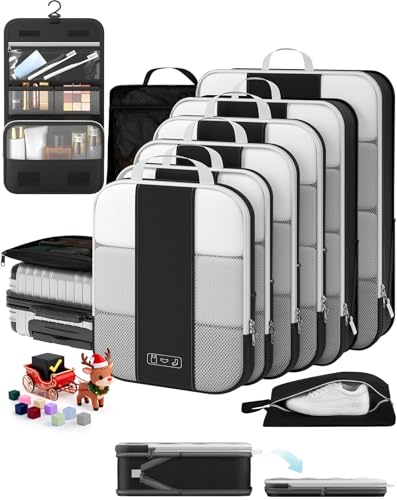
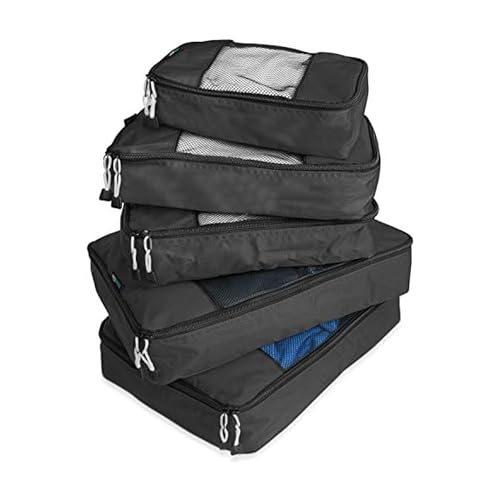
Packing using packing cubes means sorting your clothes into labeled fabric compartments, then loading those compartments into your bag as units. Done well, you can find any item without unpacking everything, and your clothes stay in place from the first hotel to the last. This guide walks through sorting, rolling, cube assignment and loading.
Step 1: Sort Clothes by Category and Use
Start by laying out everything you plan to bring. Group items by type: tops, bottoms, underwear and socks, sleepwear, and toiletries or electronics if they go in a cube. Then pull out anything you will wear on travel days, since those items should sit near the top of your bag.
Keep each cube for one purpose. A cube holding tops, another for bottoms, and a small one for underwear and socks is easier to manage than a single large cube holding a mix.
Step 2: Fold or Roll to Fit the Cube
Match each garment to the cube’s inside dimensions. Rolling works well for knits, t-shirts and synthetics because it reduces creasing and makes items easier to see. Folding suits structured shirts, dress pants and anything with a collar. Fill the cube to about 80 to 90 percent of its volume so the zipper closes without strain and the cube keeps a flat shape.
Step 3: Load Cubes in the Right Order
Pack cubes like stacked drawers. The cube you need first, usually your travel-day outfit or a change of clothes, goes on top or in an outside pocket. Heavier cubes go near the back panel and center of the bag, close to your spine, to keep the load balanced. Put your sleepwear cube toward the bottom, where you will not need it until evening.
If you pack for a backpack, place cubes so the heaviest one sits high between your shoulder blades. A balanced load reduces strain on your back and hips. For general load distribution guidance, see Packing a Backpack for Hiking: A Step-by-Step Guide to Balanced Loads.
Step 4: Use Cube Sizes That Match Your Bag
Choose a set with two or three sizes instead of many. A common arrangement is one large cube for bulky items like pants or hoodies, one medium for tops, and one small for underwear, socks and accessories. Check the cube dimensions against your bag’s internal space before you buy. The size guide Packing Cube Size Guide: What Fits in Small, Medium and Large covers common sizes in more detail.
| Cube size | Best for |
|---|---|
| Small | Underwear, socks, toiletries, cables |
| Medium | T-shirts, rolled tops, sleepwear |
| Large | Pants, jackets, bulky knits |
Common Mistakes to Avoid
- Overfilling cubes so the zipper bulges and the cube cannot slide into the bag.
- Packing every cube to full capacity, which leaves no room to add souvenirs or dirty laundry.
- Mixing wet or dirty clothes with clean ones. Use a separate mesh or laundry bag for those.
- Skipping the labeling step. Color or tag each cube so you can find it without opening others.
- Loading the heaviest cube at the top, which makes the bag unstable and pulls on your shoulders.
Recommended Gear
- Eagle Creek Pack-It Specter Cube Set: A set with several sizes that helps you sort clothes into distinct compartments. View on Amazon
- Osprey Ultralight Packing Cubes: Lightweight cubes suited to backpacking loads where every ounce counts. View on Amazon
FAQ
Do packing cubes actually save space?
Packing cubes organize space more than they add it. They help you fill gaps efficiently and compress soft items slightly, but they do not create room that was not there. Compression cubes go further by reducing volume, as described in Compression vs Regular Packing Cubes: How Much Space Do You Save?.
Should I roll or fold clothes in packing cubes?
Roll knits and casual tops to reduce creasing and make items easy to grab. Fold structured shirts, pants and anything that wrinkles easily when rolled.
How many packing cubes do I need?
Three to five cubes cover most trips. Use one per category, such as tops, bottoms, underwear and sleepwear, and add one for toiletries or electronics if needed.
Conclusion
Packing using packing cubes works best when you sort by category, fold or roll to fit each cube, and load in order of use. Start with a few cubes in two or three sizes and adjust after each trip. Over time, you will know exactly how much each category needs.
Related reading
- Ultralight Packing Cubes: Weight Saved vs Durability
- Suitcase Organizers Beyond Packing Cubes: Shelves, Dividers and Hanging Systems
About Lauren Holland
Lauren Holland is part of our editorial team and reviews and edits our backpacks & packing systems guides, checking product details against manufacturer specifications and owner feedback.